 1
1
 0
0
The 2026 Digital Coin Review Guide: Bitcoin, Ethereum, Altcoins, Risk, and What Actually Matters Now
Updated April 13, 2026
By Manus AI Research Desk
Editorial note: This article is educational in nature and does not constitute personal investment advice.
SEO title
Digital Coin Review 2026: Bitcoin, Ethereum, Altcoins, Risks and the Best Crypto Research Framework
Meta description
A comprehensive 2026 digital coin review covering Bitcoin, Ethereum, leading altcoins, crypto risks, Reddit discussion trends, regulation, E-E-A-T standards, and a practical framework for evaluating digital assets.

Crypto coins trending on Reddit
This widget samples hot posts from r/CryptoCurrency, counts mentions of major coins, and totals the comments on posts where those coins appear. It is designed as a lightweight homepage sentiment pulse, not a full-market ranking.
| Rank | Coin | Mentions | Comment count | Signal |
|---|---|---|---|---|
| 1 | Bitcoin | 55 | 944 | Dominant retail attention |
| 2 | Chainlink | 3 | 386 | High engagement concentration |
| 3 | Litecoin | 1 | 215 | Legacy coin curiosity |
| 4 | Ethereum | 20 | 158 | Steady ecosystem relevance |
| 5 | TRON | 10 | 47 | Transfer and stablecoin chatter |
Methodology: The script checks the latest hot posts from r/CryptoCurrency, scans titles and body text for selected coin names and tickers, and adds together the comment counts on matching posts. Refreshes approximately once per hour for readers who revisit the page.
Why this guide matters in 2026
The most important thing to understand about crypto in 2026 is that the market is simultaneously more legitimate and more complicated than it was in prior cycles. Traditional financial institutions are more involved, regulation is more active, and blockchain use cases are broader than simple token speculation. At the same time, prices remain highly sensitive to liquidity, policy, product launches, hacks, changing narratives, and retail sentiment. Bitcoin finished the first quarter of 2026 at roughly $66,000, down more than 20% from its New Year level, while U.S. spot Bitcoin ETFs reportedly experienced nearly $2 billion in outflows early in the quarter before roughly $1.3 billion returned in March. That combination of institutional participation and persistent volatility defines the market environment investors are dealing with now 1.
Ethereum, meanwhile, entered mid-2026 around $2,100 to $2,250, approximately 55% below its August 2025 peak near $4,954. What makes this especially notable is that Ethereum’s weaker price action has occurred despite strong network development, continued staking activity, and major discussion around exchange-traded products and roadmap upgrades such as Pectra and Fusaka 2. In other words, strong technology does not guarantee strong price performance on a short timetable.
For that reason, a useful 2026 digital coin review cannot just ask which token might go up next week. It has to ask better questions. Which networks have durable demand? Which assets are benefiting from institutional adoption? Which coins are mostly narrative vehicles? Which catalysts are macroeconomic rather than blockchain-specific? Which risks are being underpriced? And most importantly, how can a reader distinguish information from marketing?
A concise 2026 market snapshot
The table below summarizes the broad conditions shaping crypto markets in April 2026.
| Market factor | What the latest data suggests | Why it matters |
|---|---|---|
| Total crypto market capitalization | CoinGecko displayed the total market at roughly $2.542 trillion during research for this article 2 | This indicates crypto remains a very large but still volatile asset class rather than a fringe niche. |
| Bitcoin dominance | CoinGecko displayed 57.0% BTC dominance 2 | Capital is still concentrating in Bitcoin relative to the broader altcoin market. |
| Ethereum dominance | CoinGecko displayed 10.6% ETH dominance 2 | Ethereum remains central, but the market is less ETH-centric than many investors assumed during earlier cycles. |
| Q1 2026 Bitcoin performance | Bitcoin closed Q1 around $66,000, down more than 20% from New Year levels 1 | Macro conditions and ETF flows are still exerting major influence over price action. |
| Ethereum trading range context | ETH around $2,100 to $2,250, still far below the 2025 peak 2 | The gap between adoption narratives and price performance remains wide. |
| Policy catalysts | Fed meeting, central-bank decisions, and Clarity Act review all remain key April drivers 1 | Regulation and liquidity continue to move crypto almost as much as on-chain innovation. |
This is why market participants who talk only about technology are missing part of the picture, and those who talk only about price are missing another. In 2026, digital asset investing is a three-part exercise: technology analysis, macro analysis, and behavioral analysis.
What a digital asset actually is
A surprising amount of bad crypto content starts by assuming readers already know the basics. That is a mistake. Morgan Stanley defines digital assets as electronically native assets that rely on cryptographic technology and distributed networks to record ownership and transactions 3. Most operate on blockchains, which are shared ledgers maintained by distributed participants rather than a single centralized intermediary 3.
That definition matters because it helps separate serious projects from shallow marketing claims. A digital coin is not automatically valuable because it lives on a blockchain. It becomes potentially valuable when it serves a meaningful role inside a network, a monetary system, a settlement layer, a computing environment, or a financial product ecosystem. Without sustained utility, credible governance, security, and user demand, the token component alone is often not enough.
Morgan Stanley also emphasizes what many crypto promoters minimize: digital assets are highly volatile and unpredictable, and they may be affected by fraud, cybersecurity failures, regulatory shifts, market manipulation, and rapid losses 3. That warning is not anti-crypto. It is simply accurate. A credible 2026 guide must begin there.

Bitcoin in 2026: still the benchmark asset
Bitcoin remains the benchmark against which nearly every other crypto asset is judged. The simplest way to understand Bitcoin in 2026 is to view it as the market’s primary monetary asset. The case for Bitcoin is still built on decentralization, scarcity, portability, and the fixed maximum supply of 21 million coins 4. That scarcity model is one of the clearest reasons why institutions continue to treat Bitcoin differently from the rest of the market.
The strongest argument for Bitcoin today is not that it is perfect money already. It is that it has become the clearest large-scale experiment in digitally scarce, globally transferable value. The asset retains a degree of conceptual simplicity that other major blockchains do not. The Motley Fool’s 2026 comparison between Bitcoin and Ethereum argues that Bitcoin’s simpler structure and monetary focus are strategic advantages, especially relative to more complex roadmaps and execution risk elsewhere 4. Whether one agrees with that conclusion entirely, the underlying point is sound: Bitcoin benefits from having a clearer narrative than most altcoins.
This does not mean Bitcoin is risk free. Its price still reacts sharply to macro liquidity, policy expectations, ETF flows, geopolitical shocks, and shifts in trader positioning 1. But among major digital assets, Bitcoin has the strongest claim to being the market’s reserve asset. That is why it continues to dominate market share and why so much institutional commentary still begins with Bitcoin before moving elsewhere.
From a portfolio research perspective, Bitcoin is often the first asset to review because it forces investors to clarify a deeper question: are they looking for a digital commodity, a macro hedge, a speculative momentum asset, a long-duration venture-style bet on a new monetary system, or some mixture of all four? Bitcoin can act like each of those at different times. That ambiguity creates both opportunity and risk.
Ethereum in 2026: the most important utility network, but under pressure
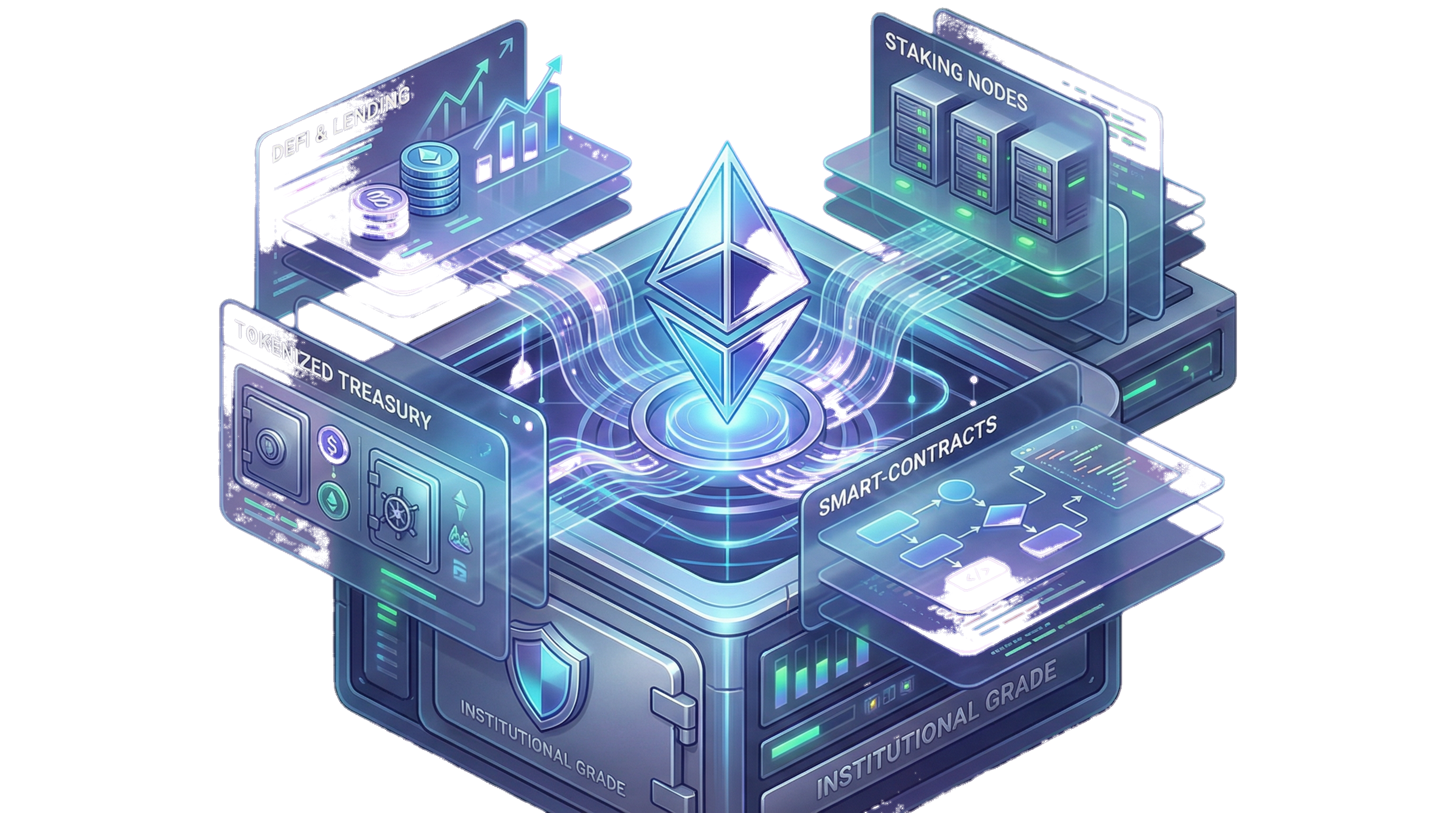
If Bitcoin is primarily the market’s monetary benchmark, Ethereum is still the leading programmable asset ecosystem. Ethereum introduced generalized smart contracts and helped create the modern template for decentralized finance, token issuance, on-chain applications, and many tokenized asset experiments. The Motley Fool notes that Ethereum remains the leader in DeFi and cited roughly $55 billion in total value locked, far ahead of Solana at the time discussed 4.
That utility remains real. Ethereum continues to matter because developers, protocols, treasury products, and financial experiments are still heavily concentrated there. It also remains central to the tokenization of real-world assets, an area in which institutions such as BlackRock and JPMorgan continue to attract attention 4. In practical terms, Ethereum is still the chain many institutions and developers trust when the goal is seriousness rather than speed alone.
Yet the 2026 Ethereum story is not purely bullish. CoinGecko’s April 2026 analysis highlights an unusually wide range of forecasts, from Citi at $3,175 to Standard Chartered at $7,500, which shows how uncertain the market remains 2. The same source also points to questions about whether Layer 2 networks are capturing value that once accrued more directly to Ethereum itself 2. That debate matters. A blockchain can become more useful while its base token captures less economic upside than investors expected.
Ethereum therefore deserves a more nuanced digital coin review than it usually gets. It is neither a broken asset nor an automatic winner. It is a high-importance network dealing with mature-market questions: fee capture, scaling design, ecosystem fragmentation, institutional product structure, and narrative fatigue after a prior cycle peak. Those are not trivial concerns. They are the concerns of an asset class moving from adolescence into something more demanding.
Solana, XRP, Chainlink, TRON, Litecoin, and the altcoin middle tier
Beyond Bitcoin and Ethereum, the 2026 market becomes much more narrative-driven. That does not make altcoins irrelevant. It means they require sharper filtering.
Solana
Solana remains one of the most important competitors in the smart-contract category because of its high throughput, active retail user base, and ongoing relevance in trading, consumer apps, and speculative activity. The practical question for Solana is not whether it can attract users. It is whether it can sustain growth while preserving reliability and ecosystem depth. Solana often benefits when market participants want lower-cost, faster activity than Ethereum mainnet can provide, but it still operates with a different trade-off profile.
XRP
XRP continues to attract attention whenever the market focuses on payments, regulatory headlines, or large-cap momentum rotations. Its community strength and brand recognition remain considerable. However, any serious XRP review has to separate legacy narrative momentum from present-day network economics and actual adoption data. XRP can remain relevant without necessarily being the best long-term crypto thesis in every environment.
Chainlink
Chainlink occupies a different category because it is not primarily competing to be a consumer blockchain. Its core importance lies in middleware and oracle infrastructure. In a market that continues to expand real-world asset tokenization, cross-chain applications, and data-dependent smart contracts, Chainlink’s role can remain strategically significant even when it is less discussed than larger-cap layer-1 tokens. That infrastructure positioning often makes it more interesting than its headline visibility would suggest.
TRON
TRON remains important largely because of its role in low-cost transfers and stablecoin activity. It does not always receive the same institutional respect as Bitcoin or Ethereum, but it remains operationally relevant in areas where low fees and high transaction volume matter. That relevance can support real usage, although it does not eliminate governance and perception concerns.
Litecoin
Litecoin tends to reappear whenever the market rediscovers simplicity, longevity, and transactional use narratives. It is rarely the center of the ecosystem’s innovation conversation, but it benefits from durability and recognizability. That does not guarantee upside, yet it explains why Litecoin continues to retain attention, especially during market phases that reward older, more established assets.
What Reddit discussions are showing right now
One useful way to complement price-based analysis is to look at community discussion intensity. For this article, we analyzed a sample of 100 hot posts from r/CryptoCurrency and aggregated coin-name mentions together with the comment counts attached to those posts 5. This is not the full Reddit universe, and it should not be mistaken for a complete social sentiment index. Still, it is a useful snapshot of what retail-facing discussion looks like right now.
| Coin | Mentions in sampled hot posts | Aggregate comments on matching posts | Interpretation |
|---|---|---|---|
| Bitcoin | 55 | 944 | Bitcoin remains the dominant discussion anchor and draws the deepest engagement. |
| Chainlink | 3 | 386 | Discussion volume is narrower, but attention is concentrated in active threads. |
| Litecoin | 1 | 215 | A single or small number of threads can still generate substantial engagement. |
| Ethereum | 20 | 158 | Ethereum is widely mentioned, though engagement is more dispersed than Bitcoin’s. |
| TRON | 10 | 47 | TRON keeps attracting discussion around transfers, stablecoins, and ecosystem debate. |
| Solana | 3 | 44 | Solana remains relevant, though not dominant in this sampled hot-post set. |
| BNB | 1 | 22 | Visibility exists, but it is not a leading organic discussion topic in this sample. |
| XRP | 2 | 18 | XRP retains attention, but discussion intensity is limited in this current slice. |
| Polkadot | 2 | 13 | Polkadot appears in active news-driven discussion but not as a dominant trend. |
The most important lesson from this table is methodological. Social discussion is not the same as investment quality. High Reddit activity may reflect conviction, controversy, fear, humor, outrage, or a short-term news event rather than durable long-term value. At the same time, a complete lack of discussion can be a warning sign that a project has lost relevance. The right use of community data is therefore not to replace research, but to supplement it.
Regulation and macro policy now matter almost as much as on-chain development
One of the biggest shifts in crypto analysis is that the market can no longer be understood solely through tokenomics and product launches. Macro and policy calendars now matter enormously. DL News identifies April 2026 catalysts such as key earnings reports from Goldman Sachs, BlackRock, JPMorgan, and Robinhood, together with the Federal Reserve meeting and Senate review of the Clarity Act 1. That is a striking list because several of those catalysts are not native to crypto at all. They are signals from traditional finance and public policy.
This tells us something important about where the market stands. Digital assets are not fully absorbed into the conventional financial system, but they are now too integrated to be analyzed in isolation. If BlackRock commentary affects flows, if tokenization desks inside major banks influence sentiment, and if stablecoin legislation can move market structure, then crypto is no longer only a technology story. It is a technology-and-finance story.
That can be positive for legitimacy, but it also means investors must track a broader range of variables. Rate expectations, ETF product evolution, stablecoin regulation, and international liquidity conditions can all affect performance. A coin can have good technology and still struggle in a hostile macro environment. Conversely, a mediocre project can rally sharply in a liquidity-driven altcoin wave. Serious research has to keep both possibilities in view.

The right way to apply E-E-A-T to crypto content
The acronym E-E-A-T stands for Experience, Expertise, Authoritativeness, and Trustworthiness. In crypto publishing, these standards matter because the market is full of low-quality content that confuses affiliate marketing, viral momentum, and genuine analysis.
A trustworthy crypto article should show readers how conclusions were reached. It should identify sources clearly. It should distinguish observed facts from forecasts. It should describe risks in plain language rather than burying them. And it should avoid fake certainty. In that sense, E-E-A-T is not merely an SEO tactic. It is a reader-protection framework.
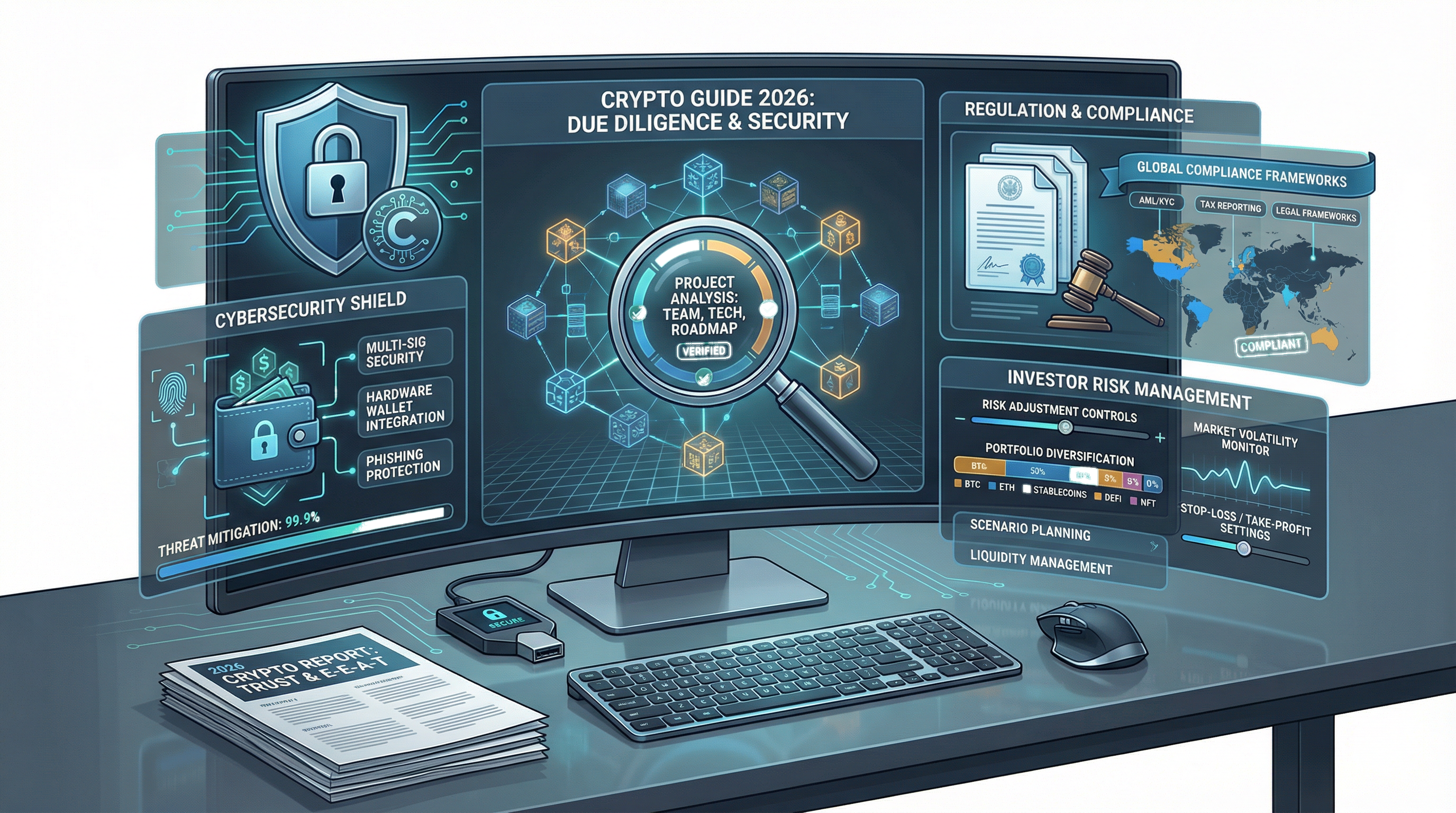
For this article, E-E-A-T means several practical choices. First, market claims are tied to named sources and dates rather than vague statements. Second, this guide clearly separates current market conditions from speculative forward scenarios. Third, the article includes methodology for its Reddit discussion snapshot instead of presenting social data as magic insight. Fourth, the article repeatedly reminds readers that crypto remains highly volatile and not suitable for every investor 3. Those are not ornamental disclaimers. They are part of responsible publishing.
How to evaluate a digital coin without getting trapped by hype
The easiest way to lose money in crypto is to confuse attention with quality. A practical research framework should begin with five questions.
The first question is whether the network solves a real problem that users actually care about. Bitcoin’s answer is scarcity and censorship-resistant value transfer. Ethereum’s answer is programmable financial and application infrastructure. Chainlink’s answer is secure external data delivery into smart-contract systems. If the use case is weak, the investment case is often weaker.
The second question is whether the token is necessary to that system. Many projects have ecosystems that sound ambitious while their token economics remain vague or extractive. If the token is merely a fundraising wrapper, long-term value capture may be poor.
The third question is whether the network is attracting serious developers, users, institutions, or businesses. Real activity matters more than social-media slogans. The reason Ethereum remains central despite its price struggles is that the ecosystem still hosts meaningful development and financial experimentation 2.
The fourth question is whether the asset’s market narrative is ahead of its actual fundamentals. Crypto routinely prices in years of hypothetical growth before the underlying economics justify it. Investors should always ask what assumptions are embedded in the current valuation and which ones must prove true.
The fifth question is whether the downside has been analyzed as carefully as the upside. Morgan Stanley’s warning about volatility, fraud, cybersecurity risk, and suitability is useful precisely because it counters the industry’s tendency to market upside while treating downside as a footnote 3. A serious investor should reverse that habit.
A practical 2026 review of the major categories
Rather than treating all coins as interchangeable, it is more helpful to divide the market into functional categories.
| Category | Leading examples | What the category is trying to do | Main research challenge |
|---|---|---|---|
| Monetary assets | Bitcoin | Store and transfer value in a scarce digital form | Determining whether adoption can broaden beyond investment and treasury use |
| Smart-contract platforms | Ethereum, Solana | Provide programmable infrastructure for apps, DeFi, and tokenization | Assessing sustainable fee capture, ecosystem quality, and developer durability |
| Infrastructure and middleware | Chainlink | Supply data and interoperability layers to blockchain applications | Measuring how much value the token captures relative to network importance |
| Payment and transfer networks | XRP, TRON, Litecoin | Optimize settlement speed, cost, or cross-border transfer narratives | Distinguishing actual usage from recycled narrative momentum |
| Stablecoins and tokenized finance rails | USDT, USDC, tokenized treasury products | Provide dollar liquidity and blockchain settlement rails | Understanding regulatory exposure, issuer risk, and reserve quality |
This categorization matters because it prevents shallow comparisons. Bitcoin and Chainlink are not the same type of asset. Ethereum and XRP are not solving the same problem. A useful digital coin review should therefore compare like with like whenever possible.
The case for patience in 2026
One of the hardest truths about crypto is that even strong assets can spend long periods disappointing investors. Ethereum’s current valuation gap relative to prior highs illustrates that reality clearly 2. Bitcoin’s rough first quarter despite institutional product maturity also shows that the market does not move in a straight line 1.
That reality should not necessarily make investors bearish, but it should make them disciplined. The best research process in 2026 is less about finding the loudest token narrative and more about building conviction slowly. Investors who know why they hold an asset are more likely to survive volatility than those who bought because a chart looked exciting or a social feed felt euphoric.
What belongs on a serious watchlist now
A balanced watchlist in 2026 should usually begin with Bitcoin and Ethereum because they remain the two most systemically important digital assets by role, liquidity, and relevance 2. From there, the selection depends on thesis.
If the thesis is smart-contract competition and user growth, Solana belongs under review. If the thesis is tokenized finance infrastructure, Ethereum and Chainlink deserve close attention. If the thesis is transaction efficiency and payment rails, XRP and TRON remain relevant. If the thesis is simple durability and legacy transactional relevance, Litecoin still has a case for monitoring. None of these coins should be bought automatically, but each deserves a thesis-driven assessment rather than a meme-driven one.
A responsible conclusion for investors and readers
The crypto market in 2026 is large enough to matter, mature enough to demand discipline, and risky enough to punish careless optimism. Bitcoin continues to function as the market’s reserve-style benchmark, with scarcity and simplicity anchoring its appeal 4. Ethereum remains the most important utility ecosystem, even as its valuation story becomes more complex and contested 2. Altcoins still offer upside, but their quality varies dramatically, and their narratives often move faster than their fundamentals.
The most responsible conclusion is not that one coin will certainly win everything. It is that readers should stop treating crypto as a single monolithic trade. This is now a layered market that includes monetary assets, software platforms, data infrastructure, payment networks, and tokenized financial rails. Different assets deserve different analytical frameworks.
If there is one core takeaway from this digital coin review, it is this: good crypto research in 2026 is less about prediction and more about disciplined filtering. The investors and readers most likely to navigate the market well are those who respect macro conditions, verify claims, examine utility, track regulation, understand risk, and refuse to confuse excitement with evidence.
Editorial methodology
This article was prepared using a combination of mainstream financial commentary, crypto-market research, policy reporting, and a manually aggregated snapshot of current Reddit discussion from r/CryptoCurrency. Market conditions can change quickly, and readers should check the latest price, regulatory, and product information before making any financial decision.
Risk disclaimer
Digital assets are volatile, speculative, and may not be suitable for all investors. Nothing in this article should be interpreted as personalized investment, legal, or tax advice. Readers should perform independent due diligence and, where appropriate, consult a qualified financial adviser.
Frequently asked questions
What is the best crypto to buy in 2026?
There is no single universally best crypto to buy in 2026. Bitcoin remains the clearest large-cap benchmark asset because of scarcity and institutional attention, while Ethereum remains central to smart contracts and tokenized finance 2. The right choice depends on whether an investor is seeking a monetary asset, a utility network, infrastructure exposure, or speculative upside.
Is crypto still worth researching in 2026?
Yes, but it requires more discipline than in earlier cycles. The market now sits at the intersection of technology, regulation, macroeconomics, and institutional product development 1. That makes careful research more important than ever.
Why does Reddit sentiment matter for crypto?
Retail discussion often reveals which narratives are attracting attention, controversy, or fear in real time. However, social discussion should be treated as a supplementary signal rather than a replacement for fundamentals. Our sampled Reddit data showed Bitcoin dominating current high-engagement discussion, but that alone does not make it the best investment for every reader 5.
What is the biggest mistake new crypto investors make?
The biggest mistake is often buying a story before understanding the asset’s function, token economics, governance risks, regulatory exposure, and downside scenario. In crypto, information quality is part of risk management.
References


